Feb 03, 2026 | Radiflow team
On December 29, 2025, Poland experienced one of the most serious cyber incidents targeting critical energy infrastructure to date. Coordinated attacks struck more than 30 wind and solar farms, a combined heat and power (CHP) plant, and a manufacturing company, demonstrating how cyber operations can disrupt both IT and operational technology (OT) environments simultaneously.
While electricity generation itself was not halted, attackers achieved deep access into substation control environments and permanently damaged critical industrial devices. The incident underscores a growing reality: Renewable energy assets are increasingly exposed, remotely accessible, and attractive targets for nation-state and advanced threat actors.
Modern renewable energy operations depend heavily on:
Remote substations
Cellular routers and VPN gateways
Cloud-based monitoring platforms
Third-party maintenance access
This creates a broad attack surface in which IT weaknesses can directly impact OT operations.
The report shows that attackers did not rely solely on zero-day exploits. Instead, they exploited common industry weaknesses such as:
Internet-facing VPN appliances
Weak authentication practices
Default passwords on industrial equipment
Lack of firmware integrity enforcement
These are not exotic attack techniques — they are preventable configuration and security hygiene failures.
From Radiflow’s perspective, this incident highlights two systemic security gaps in renewable energy and utility environments:
1. Remote Access Remains the Primary Attack Vector
Remote access was the entry point in nearly every compromised site. VPN concentrators exposed to the internet without multi-factor authentication provided attackers with a direct bridge into OT environments.
Radiflow Recommendation: Harden Remote Access Immediately
Renewable operators should implement:
Multi-factor authentication on all VPN and remote access gateways
Zero-trust remote access architectures
Strict role-based access control (RBAC)
Time-limited and just-in-time access for vendors
Network segmentation between IT, DMZ, and OT zones
Remote connectivity is operationally necessary — but without proper controls, it becomes the attacker’s fastest path into critical infrastructure.
2. Lack of Early Detection Allowed Deep Intrusions
CERT Polska documented that attackers performed reconnaissance and credential harvesting weeks or months before executing destructive payloads in some environments. In many renewable sites, there was no indication that abnormal activity was detected before devices were wiped or firmware was corrupted.
Radiflow Recommendation: Deploy Industrial Intrusion Detection Systems (IDS)
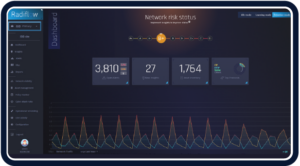
Radiflow iSID – Visibility and Anomaly Detection
Passive OT-aware IDS solutions are essential for:
Detecting unauthorized remote access attempts
Identifying abnormal industrial protocol behavior
Monitoring firmware upload activity
Spotting lateral movement between substations and control networks
Providing early warning before attackers reach destructive stages
An IDS tailored for industrial networks enables operators to move from reactive recovery to proactive threat containment.
This attack demonstrates that renewable energy facilities are no longer “soft targets” on the fringe of critical infrastructure — they are now front-line assets in geopolitical cyber conflict.
The attackers achieved:
OT device destruction
Loss of operational visibility
Delayed recovery through configuration sabotage
Coordinated multi-site disruption
All without exploiting exotic vulnerabilities.
As renewable energy adoption accelerates globally, cybersecurity maturity must scale alongside it. Wind farms, solar parks, and grid interconnection substations are no longer isolated industrial assets — they are connected digital ecosystems.
Radiflow strongly advises renewable operators to prioritize:
Remote access hardening
Industrial IDS deployment
Continuous OT network monitoring
Vendor access governance
Security-by-design architecture for new sites
Cyber resilience is no longer optional for clean energy. It is a prerequisite for grid stability, public trust, and national energy security.
For The Full Report>>>CERT_Polska_Energy_Sector_Incident_Report_2025 (2)


Renewable Energy Cybersecurity Wake-Up Call: How to Protect Wind and Solar Sites From Remote Access Attacks

Hacktivists Are Hijacking Exposed ICS Devices — Here’s What Every Operator Must Know

The JLR Cyber Incident: A Wake-Up Call for Manufacturing Resilience